Showing posts with label linked data. Show all posts

Tuesday, June 2, 2009

licenses and linked data

One of the major downsides of working outside of academia is that I now have to pay much more attention to licenses.  No longer can I just grab whatever data I like, do something fun with it, and try to publish what I did and move on.   Now I need to know - very specifically - what I am allowed to do with what so I can reduce the possibility of being sued and so that I can put up appropriate "powered by bla bla" messages.  Not being fond of reading legal agreements, this is a drag.


So I thought to myself, "there should be a legal ontology for linked data!".  That way I could tell my data harvesting program to ignore (or hide I suppose) any data that I wasn't legally allowed to put into my new for-profit-maybe-someday-I-hope mashup and thus never have to bother reading those agreements again.

I am not the first to think of this of course.  Here is a nice-looking abstract attached to a paper that I would like to read but am no longer allowed to read for free.
"The license agreement can be seen as the knowledge source for a license management system. As such, it may be referenced by the system each time a new process is initiated. To facilitate access, a machine readable representation of the license agreement is highly desirable, but at the same time we do not want to sacrifice too much readability of such agreements by human beings. Creating an ontology as a formal knowledge representation of licensing not only meets the representation requirements, but also offers improvements to knowledge reusability owing to the inherent sharing nature of such representations. Furthermore, the XML-based ontology languages such as OWL (Web Ontology Language) can be user friendly for the non-developers who are often those responsible for implementing and managing such license agreements. This paper shows our use of ontology to represent the license agreement in a development prototype. The ultimate goal is to build ontology for the license management domain that will facilitate autonomic knowledge management. Knowledge based on such ontology can then be shared and utilized by many types of license management system. "
What do you think?  Is it worth it to pay Springer $29 for the 1592kb in that paper?  

Saturday, July 7, 2007

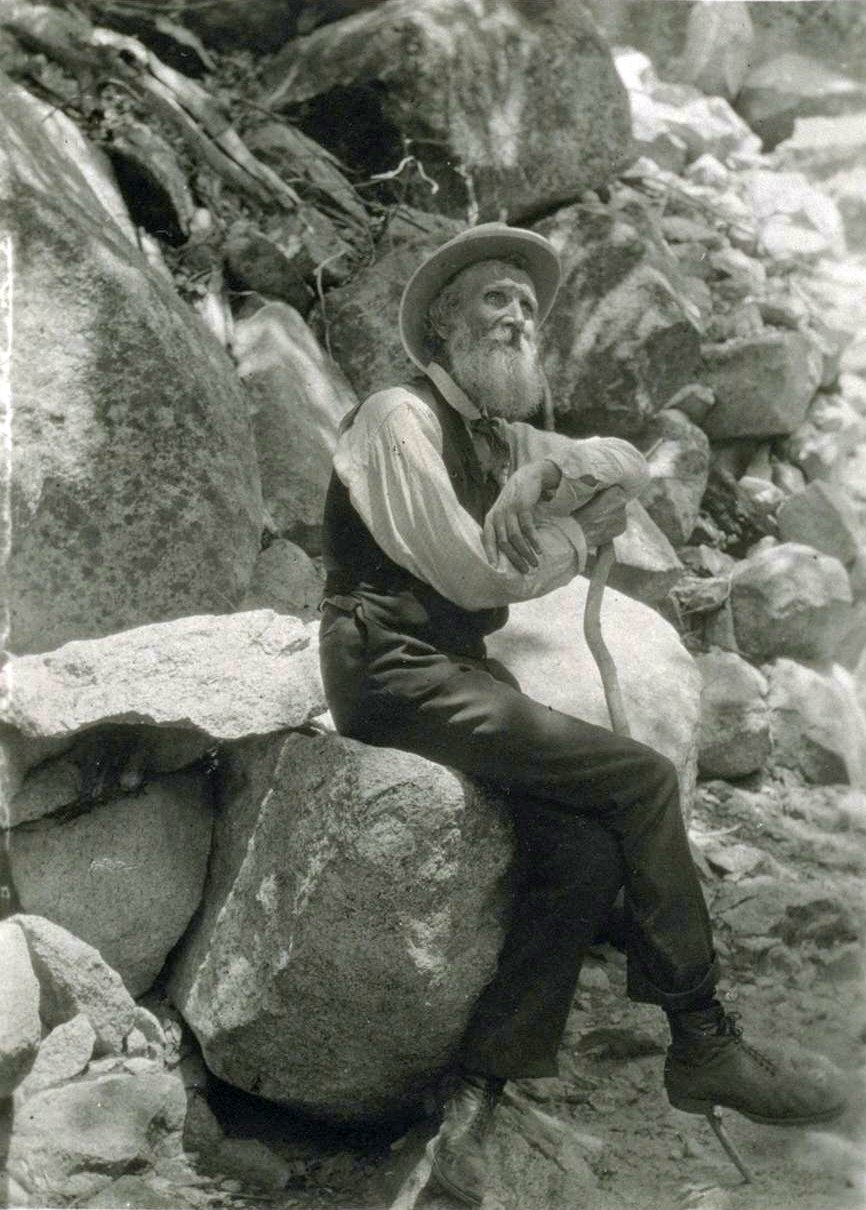
Muir on Links


"When one tugs at a single thing in nature, he finds it attached to the rest of the world."

John Muir points out a fundamental truth of the physical world that seems to me to describe what the semantic web should be striving to achieve for the virtual.
Reminds me of what is becoming my mantra..
No more dead ends...

Sunday, May 20, 2007

Linked Data - a new name for RDF..

Aside from the collaborative construction of knowledge workshop that I discussed in my last post, no particular session or presentation from WWW2007 really stands out in my mind. That being said, the various sessions organized under the rather loose term "linked data" seemed to me to offer the most exciting new developments. Whether this was because Tim Berners-Lee was at most of these sessions or whether he was at these sessions because this was where the action was, I can't be sure.

The concept of "linked data" as far as I can tell, is essentially the same as web-based data integration which, IMO, is essentially the applied (non-theoretical/"actually useful") version of the semantic web. The basic ideas (described here) are basically that data should be represented in RDF and should be exposed on the Web such that the URIs can be "linked to" by other RDF statements in a similar way to how HTML pages can be linked to from other pages (but with the additional semantics provided by the RDF language). As I thought this was the basic idea of RDF all along, I'm a little uncertain why the new name came into being - perhaps its just easier to get across to people.

Anyway, the point is that, all of a sudden, there seems to be a whole lot of linked data/resolvable RDF out on the Web (finally!). One of the most exciting academic projects under this umbrella is DBpedia. DBpedia has converted the structured information present in Wikipedia into a resolvable RDF representation. This means that you can query it like a database and you can link to it in the data that you publish in as RDF - enriching both your own content and the semantic web as a whole. Cool.. Another project along similar lines but from the commercial side is called FreeBase.

Within the bioinformatics domain, we will shortly be seeing the public announcement of the new, fully RDFized version of UniProt and we already have an RDF wrapper around a large portion of the world's major bioinformatics databases in the form of Francois Belleau's Bio2RDF.

The semantic web is there - time to start writing those agents and browsers that can actually make use of it!