So, as I think I mentioned, a few weeks ago I had the pleasure of visiting the Royal Tyrrell Museum of Palaeontology in Drumheller, Alberta. I have to admit that I was a little skeptical about the several extra hours of driving entailed by this side trip on the way home from WWW 2007, but it turned out to be well worth it. In many ways it was much more memorable than the conference, as side trips usually are I guess.
The Tyrrell museum is cool for three main reasons, it has loads of very well preserved and reconstructed dinosaur skeletons, most of the specimens seem to come from nearbye (you can still find them yourself all around apparently), and the museum is laid out in a very precise (as far as I can tell :), chronological order. You start out at the beginning of life on Earth and work your way through the museum and through the ages, the history of life unfolding all around you. Though the dinosaurs are amazing, the scientific highlight of the museum is definitely the tribute that they have assembled to the specimens of the Burgess Shale.
Though not as impressive as the dinosaurs, the little beasts in this collection tell very interesting stories about the history of life, and, according to some, the nature of evolution. The interesting thing about them {e.g. Hallucigenia,Pikaia, Anomalocaris} is that many seem to offer no logical connection to any modern organism - their lines apparently ending primarily in extinctions rather than evolutionary adaptation towards modern forms. Stephen Jay Gould used these observations as evidence for his ideas about punctuated equilibrium and, especially, about the importance of historical contingency (luck) in evolution in his book Wonderful Life. I know this because I was so excited about Life and in particular about the Burgess Shale that I bought the first book I could find that had anything to do with it in the museum gift shop and read it immediately.
As I walked through that museum, I was reminded of the absolutely stunning diversity of life. That re-realization really woke up a lot of things about myself that have been hidden by my currently very urban life and the non-biological nature of my work. First, this sounds strange to say, but it really made me want to go scuba diving again... Diving is about the only thing that I've done that has produced the feeling of discovery ("holy crap, did you seethat!!..") that I felt in that museum. Another thing it reminded me of was that I actually got into biology quite some time ago specifically to get a better understanding of evolution. Somehow I've been pretty thoroughly sidetracked.. contingency in my own life history perhaps.
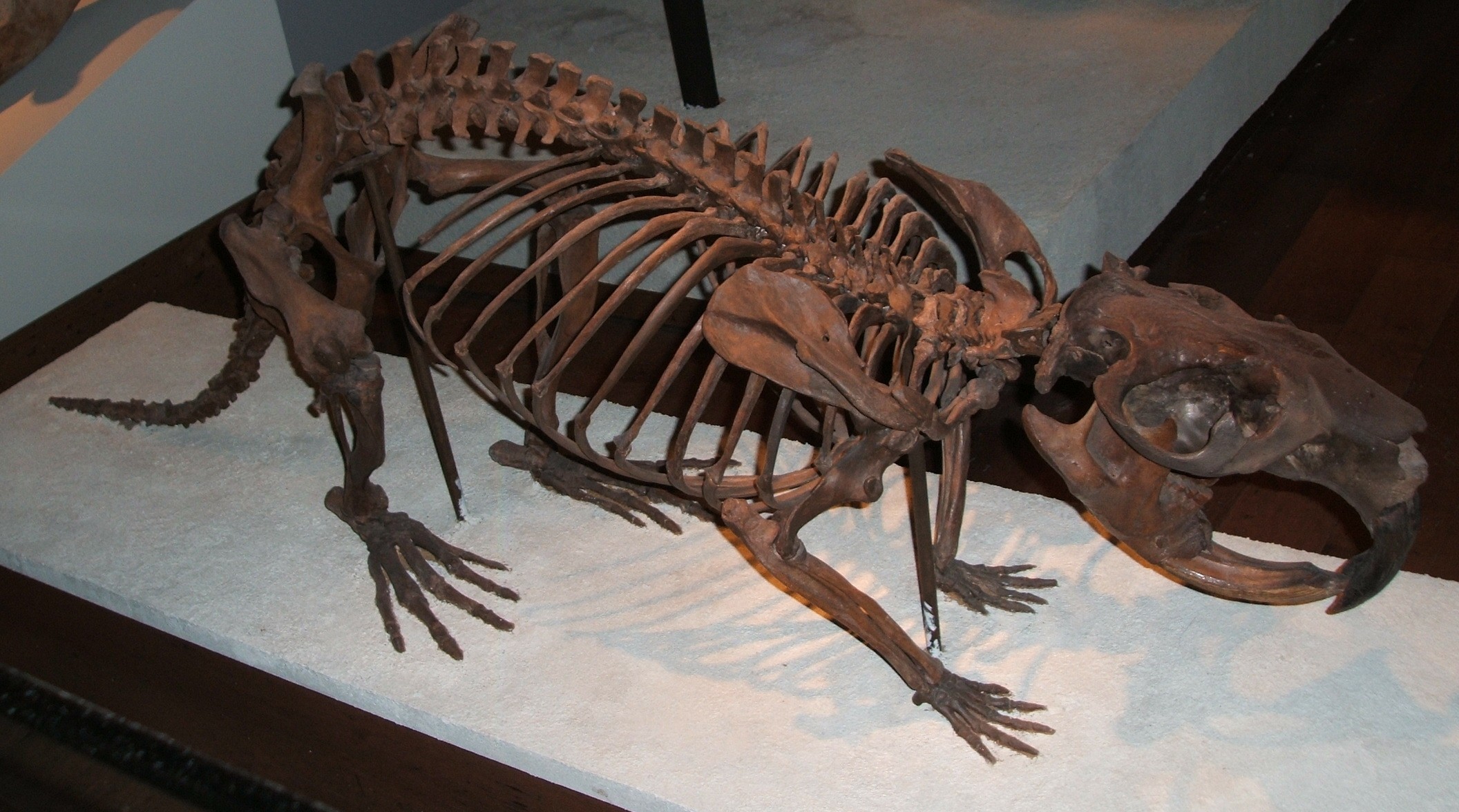
To conclude, I title this post "Jealous of Time" because those words started echoing through my head about halfway through my visit to the Terrell. I felt a sense of loss at not having had the chance to see all of those wonderful creatures before they dissappeared forever. I mean c'mon, wouldn't you have liked to have a chance to see an 8 foot long beaver in action!!
Friday, June 15, 2007
Jealous of Time

Sunday, May 20, 2007
Linked Data - a new name for RDF..
Aside from the collaborative construction of knowledge workshop that I discussed in my last post, no particular session or presentation from WWW2007 really stands out in my mind. That being said, the various sessions organized under the rather loose term "linked data" seemed to me to offer the most exciting new developments. Whether this was because Tim Berners-Lee was at most of these sessions or whether he was at these sessions because this was where the action was, I can't be sure.
The concept of "linked data" as far as I can tell, is essentially the same as web-based data integration which, IMO, is essentially the applied (non-theoretical/"actually useful") version of the semantic web. The basic ideas (described here) are basically that data should be represented in RDF and should be exposed on the Web such that the URIs can be "linked to" by other RDF statements in a similar way to how HTML pages can be linked to from other pages (but with the additional semantics provided by the RDF language). As I thought this was the basic idea of RDF all along, I'm a little uncertain why the new name came into being - perhaps its just easier to get across to people.
Anyway, the point is that, all of a sudden, there seems to be a whole lot of linked data/resolvable RDF out on the Web (finally!). One of the most exciting academic projects under this umbrella is DBpedia. DBpedia has converted the structured information present in Wikipedia into a resolvable RDF representation. This means that you can query it like a database and you can link to it in the data that you publish in as RDF - enriching both your own content and the semantic web as a whole. Cool.. Another project along similar lines but from the commercial side is called FreeBase.
Within the bioinformatics domain, we will shortly be seeing the public announcement of the new, fully RDFized version of UniProt and we already have an RDF wrapper around a large portion of the world's major bioinformatics databases in the form of Francois Belleau's Bio2RDF.
The semantic web is there - time to start writing those agents and browsers that can actually make use of it!
Wednesday, May 9, 2007
WWW2007, workshop on the collaborative construction of structured knowledge
I just returned from the World Wide Web conference in Banff, Alberta, Canada and now I'm frantically trying to assemble some notes before it all fades into the memory fog.
The first day of the conference I attended a workshop on the collaborative construction of structured knowledge. The purpose of the workshop was to explore requirements, opportunities, and current tools for enabling multiple people to contribute to the same knowledge resource. The resources ranged from tags at the bottom, through wikis, to the creation of description logic ontologies. Below I offer a few highlights of the day from my perspective, starting with my own little brush with fame.
Prior to the workshop, there was a competition involving 6 new collaborative KR tools. In this competition, the users of the tools competed with one another based on how many bits of knowledge that they constructed with the tools and on the quality of the comments that they provided to the tool builders. The contest incentivized people to actually try the (mostly pre-alpha..) tools thoroughly, thus providing the tool builders with good feedback and stimulating discussion at the workshop. At the end of the workshop, Natasha Noy, one of the organizers and a pre-eminent figure in the world of ontology based knowledge representation, preceeded her presentation of the results of the competition by acknowledging that a paper by "Mark Wilkinson" provided some of the inspiration for the idea of the competition. Ahem.
As the first author of the paper that she was referring to, I was 99% thrilled to have it recognized by such a prestigious figure but (at least) 1% distressed that it was referred to as Mark's paper without any mention of me or any of the other author's (though the others had a very limited role). I spoke up and she immediately apologized - and did so again in person after the end of the session. I have no hard feelings about it, and like I said, am delighted that people like Natasha, who are at the very top of this field actually knew about my work; however, the whole episode brings up a lot of interesting facets of the culture and perhaps the economics of academia (and perhaps all human society in the networked world) that might help to shed some light on the questions about blogging I am still trying to work through. I'll talk about this more in another entry..
A few highlights:
1) Andrew Gibson - Described the need for people of different backgrounds and with different desires to interact with ontologies. This provided some of the motivation for a web2.0 classification system for ontologies. Each ontology would have its own 'profile' consisting of meta-data (kept distinct from the ontology file) that would include information about aspects such as authorship, revision state, history, purpose, deployments, users, and even threaded discussions.
Cool, lets make it happen.
2) Michael Backhaus presented BOWiki - a biology specific semantic media wiki. Interesting to see if the work they did in grounding it in an upper ontology of function will matter. (Only if they can actually get users..)
3) SOBOLEO - My personal favorite entry in the challenge because a) it worked for me b) it was simple and c) I enjoyed the live edit tracking feature.
4) Also from SOBOLEO group: A very clever idea called imagenotion. Basically, it replaces concept term labels with pictures. I think this is an obvious (in retrospect) and potentially extremely powerful thing to enable. Is a picture worth a thousand words? Has to be a paper title for them if it isn't already. The incorporation of multimedia in the ontology browsing/creation experience is going to be exciting because it will really make it much easier (I think) to communicate the concepts with real people (not robotic logicians).
5) Great keynote "Stone Soup", "freebase" on economic lessons for the now web.
More to come on this..
Saturday, May 5, 2007
WWW conference
Along with three trusty geek companions (Dr. Mark, Dr. Cartik and Mr. Byron), I depart on Monday for the 16th Int. World Wide Web conference in beautiful Banff, Alberta, Canada. Aside from taking in the fantastic scenery and learning what I can, I'll be presenting a poster describing experiences with volunteer knowledge engineers.
Following the conference, we will take a quick trip to dinosaur valley in Drumheller Alberta Should be lots of fun! (Then back to ontology evaluation via inductive learning).


 Posts
Posts


